Media Buying
In-House Media Buyer vs Agency: Which Wins for Direct Response?
In-house media buyer or agency? We compare real costs, hidden expenses and the revenue threshold where hiring beats outsourcing for direct response brands.
By Waqas Amjad 10 min read
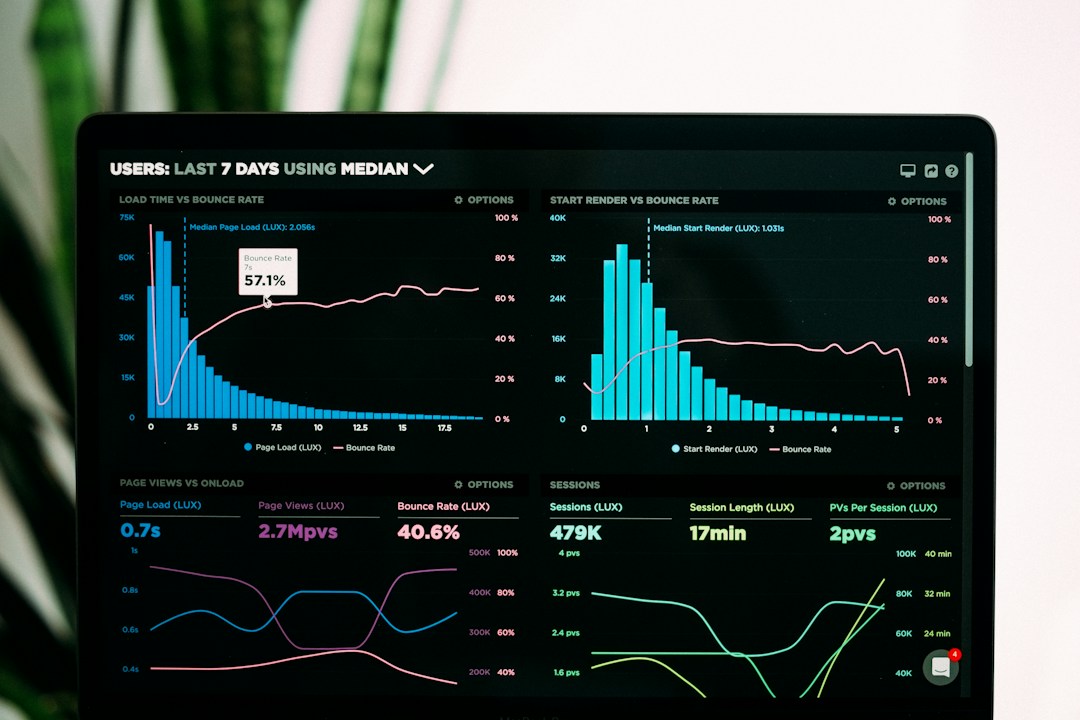
Your founder account shows 6.2x ROAS on Meta. The agency email arrived two hours later praising strong performance. You look closer. They spent $47,000 last month. Your refund queue grew by 34%. Nobody connected the two numbers. That is the structural flaw most founders discover only after paying the bill for six months.
Hiring an in-house media buyer or sticking with an agency is not a talent question. It is a cost, capability and timeline decision. The answer depends on how much you spend, how fast you need results and whether you can recruit someone who understands direct response rather than brand awareness.
Here is the honest comparison, including where hiring wins and where agencies earn their fee.
How much does an in-house media buyer really cost?
A US in-house media buyer earns roughly $60,000 to $95,000 a year according to 2026 Glassdoor salary data [1]. But salary is not the real number. Add payroll tax, benefits, software subscriptions, equipment and management time, and the loaded cost lands at $78,000 to $124,000 annually, or $45 to $70 an hour [2].
You also carry recruiting time. The average posting to hire cycle for a competent media buyer is eight to twelve weeks. Then comes ramp. A new hire takes another three to four months to reach full productivity. Six to nine months total before they match the output of an established agency team that already knows the platforms.
Freelance media buyers charge $50 to $150 an hour [2]. The flexibility appeals to operators who want to test the waters. The problem is continuity. A good freelancer gets pulled into other clients. Account access changes go unreported. Creative testing slows because nobody owns the calendar.
An agency charges a flat retainer of $2,500 to $15,000 a month, or ten to twenty percent of ad spend [2]. For a brand spending $50,000 a month on ads, a fifteen percent fee is $7,500 a month. At that price point you get a team, buyer, strategist and analyst, not one person. Agencies also absorb platform change risk. When Meta launches a new feature, the agency tests it across multiple accounts before you ever see it.
Offshore embedded buyers sit at roughly $15 an hour, about $2,400 a month full-time [2]. The rate difference is geography, not competence. Ad platforms are identical worldwide. What you trade for the lower cost is management overhead and continuity risk.
| Hiring model | Monthly cost range | Best fit | Key risk |
|---|---|---|---|
| US in-house (loaded) | $6,500 to $10,000 | Large always-on budgets above $500K yearly spend | Ramp time, single point of failure |
| Freelancer | $2,000 to $8,000 | Short projects, specific platforms | Continuity, vetting time |
| Agency (retainer) | $2,500 to $15,000 | Multi-channel sprints, complex setups | Shared attention, turnover |
| Offshore embedded | ~$2,400 | Dedicated ongoing management | Management overhead |
When hiring in-house makes financial sense
I would hire an in-house media buyer when three conditions align.
First, your annual ad spend exceeds $500,000. At that level, a loaded senior hire becomes cost-competitive with mid-market agency retainers, and the institutional knowledge starts compounding. MHI Growth Engine maps this progression explicitly: early stage founders manage ads themselves, growth stage ($500K to $3M revenue) brings in a junior buyer, scale stage ($3M to $15M) builds a performance team with a creative strategist attached [3].
Second, paid media is your primary acquisition channel and you need creative testing cadence that an agency cannot match. In-house teams produce briefs grounded in daily product knowledge. They iterate on creative based on what customers say in support tickets and refunds. An agency receives a brief on Tuesday and sees the results on Friday. An in-house buyer sees the feedback loop in real time.
Third, you have bandwidth to manage. A media buyer is not a set-and-forget hire. You need weekly check-ins, creative approvals, budget decisions and the patience to let their testing play out over forty-five days. If you are still writing landing pages yourself, a buyer will slow you down more than help you.
Direct response media buying requires a different skill set than e-commerce or SaaS. These buyers understand cohort value, LTV curves, offer testing and the relationship between ad spend and downstream support costs. Most generalist media buyers do not. Hiring one without that background is expensive experimentation.
When an agency earns its fee
Agencies are worth the premium when you need speed, depth or cross-account pattern recognition.
Speed matters most at the growth stage. A quality agency can be running campaigns within two to four weeks of onboarding [3]. Hiring, vetting, onboarding and ramping an in-house buyer takes three to six months minimum. During that gap your ad spend either stagnates or you throw money at a freelancer who may not deliver.
Depth matters when you run multiple platforms. A single in-house buyer rarely masters Meta, Google, TikTok and Amazon simultaneously at a senior level. Each platform demands distinct skills, separate testing frameworks and different reporting structures. Agencies spread specialists across channels so your account gets a buyer for Meta, a search specialist and a creative strategist. The combined cost may exceed a single salary, but the coverage is broader.
Cross-account pattern recognition is the advantage most founders underestimate. Mercury Marketing notes that agencies see creative performance trends across dozens of clients before any single brand does [4]. When a new audience format or bidding strategy emerges, the agency has already stress-tested it on three similar accounts. Your in-house buyer learns through your ad spend.
Basis found that fifty-four percent of agency professionals reported increased client tensions over the past two years, suggesting the relationship itself is under strain as brands demand more transparency and control [5]. This tension is often what puts the in-house question on the table. The fix is not always firing the agency. Sometimes it is renegotiating the division of labor.
What actually goes wrong with each option
What I see most often is not a bad hire or a bad agency. It is a mismatch between the model and the business stage.
When an in-house buyer fails, it is usually because:
- They have no direct response experience and treat the account like a brand awareness campaign
- Creative production falls on the same person optimizing bids, creating overload
- There is no structured testing process, so the account drifts toward whatever worked last quarter
- The founder cannot step back from campaign management even as the brand grows
When an agency fails, it is usually because:
- The account manager rotates every three to six months, resetting institutional knowledge
- Reporting emphasises vanity metrics (reach, impressions) instead of new customer acquisition
- The creative strategy lives entirely outside the account, producing briefs disconnected from actual customer feedback
- Long-term contracts lock you in with no performance clauses
The hidden cost neither model advertises is opportunity cost. Every hour you spend interviewing candidates, reviewing reports or negotiating contracts is an hour you are not working on product, partnerships or the thing that built your business in the first place. An agency absorbs some of that friction. An in-house buyer creates more of it during ramp.
The hybrid model most operators skip
The hybrid approach splits ownership between internal and external. Your in-house buyer handles day-to-day optimization on your primary channel. The agency manages secondary platforms or provides strategic oversight.
This model captures the fastest iteration speed from the internal hire and the cross-account benchmarking from the agency. It works well at the growth stage, typically between $2 million and $15 million in annual revenue according to MHI Growth Engine [3].
The downside is obvious: you pay both costs. But the alternative is choosing between incomplete expertise (one buyer trying to cover everything) and slow learning (ramping an in-house team from scratch). Hybrid gives you overlap during the transition period. Over twelve to eighteen months, you can phase the agency out as the internal team matures, using agency expertise to train your hires.
We often come in on strategy, tracking and attribution while an in-house buyer keeps day-to-day control of the account. That arrangement lets you get the diagnostic work done without disrupting ongoing operations. Our media buying service covers cold traffic on Meta, Google, TikTok and Amazon managed to ROAS targets. If you are still evaluating whether paid media should be built internally or handed off, the comparison of in-house versus outsourced operations walks through the trade-offs across every function, not just ads. And if you want a structured way to think about which systems to build first, download the free Growth Blueprint.
How to decide which path fits your situation
Use this checklist to score your position:
- Annual ad spend above $500K? If yes, in-house becomes cost-competitive.
- Need results within six weeks? If yes, agency wins on speed.
- Running three or more platforms? If yes, agency provides broader coverage.
- Creator or product team available for rapid creative iteration? If yes, in-house gains an edge.
- Founder willing to delegate campaign management? If no, in-house will create more work.
- Prior bad agency experience? If yes, in-house may feel safer despite the ramp cost.
- Budget below $50K monthly? If yes, agency expertise per dollar is hard to beat.
Score five or more points toward in-house, and the case is strong. Score toward agency, and the math supports outsourcing. Land in the middle, and the hybrid model deserves serious consideration.
What we see in practice
I have watched this decision play out across hundreds of direct response businesses. The ones that got it right shared one trait: they treated the choice as reversible.
They did not sign a two-year agency contract before evaluating in-house options. They did not fire the agency and hire a buyer on the same Monday. They ran parallel tracks for three months, kept the agency on one channel while a new hire took another. Then they measured which setup delivered better new customer acquisition at target CPA.
The ones that got it wrong made one mistake. They optimised for the metric they could see today, lower monthly fees, faster launch date, cleaner reporting, instead of the metric that pays the bills. Cohort value thirty days out. Refund rate. Support cost per acquired customer. Ad accounts optimised in isolation from the funnel, the email sequence and the support queue quietly increase refunds and nobody connects the two. That is the structural failure I see most often.
If you are actively running paid media and wondering whether the current setup is optimal, I would start with a diagnostic call rather than a hiring plan. Three things surface quickly: whether your tracking is measuring the right outcome, whether your creative testing cadence matches your budget, and whether the person managing your accounts actually cares about what happens after the sale.
FAQ
At what revenue should we hire an in-house media buyer?
Most direct response brands reach cost parity between a loaded in-house hire and a quality agency retainer around $500K to $1M in annual ad spend. Below that threshold, agency expertise per dollar is usually better. Above it, institutional knowledge compounds and the fixed cost of a senior buyer becomes justified.
What happens to our ad accounts if we fire an agency?
The data walks out with them unless your contract specifies otherwise. Campaign history, audience segments, rate intelligence and performance benchmarks live inside the agency environment when they control the platform. The transition takes three to six months of degraded performance even under ideal conditions. Always negotiate data portability before signing.
Can we keep an agency while hiring one person in-house?
Yes. A hybrid model works well at the growth stage. An in-house buyer handles day-to-day optimization on your primary channel while the agency manages secondary platforms or provides strategic support. You pay both costs but get faster iteration speed from the internal hire plus cross-account pattern recognition from the agency.
How do we know if our media buyer is actually good?
Measure new customer acquisition rate against your target CPA, not just ROAS. Good buyers also track creative fatigue before CTR collapses, run incrementality tests to verify their spend drives genuine growth, and can explain their testing framework without jargon. If they cannot show you the structure behind their results, they are managing noise.
Is offshore media buying cheaper than in-house?
An embedded offshore buyer runs about $15 an hour, roughly $2,400 a month full-time, compared to $60K to $124K fully loaded for a US in-house hire (Ad Snipper 2026). The rate difference is location, not skill. Major ad platforms are identical worldwide. But you trade continuity risk and management overhead for the lower cost.
Sources
- Glassdoor. "Media Buyer Salary in United States." 2026. https://www.glassdoor.com/Salaries/media-buyer-salary-SRCH_KO0,11.htm
- Ad Snipper. "How Much Does a Media Buyer Cost in 2026?" 2026. https://adsnipper.com/blog/media-buyer-cost/
- MHI Growth Engine. "In-House vs Agency for DTC Paid Media: Honest Comparison." Updated February 2026. https://mhigrowthengine.com/blog/in-house-vs-agency-paid-media-dtc/
- Mercury Marketing. "Agency vs. In-House: What's Better for Your Media Buying Strategy?" Updated May 2026. https://www.majortom.com/mercury-blog/agency-vs-in-house-whats-better-for-your-media-buying-strategy-pros-and-cons
- Basis. "Should You In-House Your Media Buying? A 2026 Guide for Brands." July 2026. https://basis.com/insights/should-you-in-house-your-media-buying-a-2026-guide-for-brands
- Basis. "2026 Advertising Agency Report." 2026. https://basis.com/reports/2026-advertising-agency-report
Questions
- At what revenue should we hire an in-house media buyer?
- Most direct response brands reach cost parity between a loaded in-house hire and a quality agency retainer around $500K to $1M in annual ad spend. Below that threshold, agency expertise per dollar is usually better. Above it, institutional knowledge compounds and the fixed cost of a senior buyer becomes justified.
- What happens to our ad accounts if we fire an agency?
- The data walks out with them unless your contract specifies otherwise. Campaign history, audience segments, rate intelligence and performance benchmarks live inside the agency environment when they control the platform. The transition takes three to six months of degraded performance even under ideal conditions. Always negotiate data portability before signing.
- Can we keep an agency while hiring one person in-house?
- Yes. A hybrid model works well at the growth stage. An in-house buyer handles day-to-day optimization on your primary channel while the agency manages secondary platforms or provides strategic support. You pay both costs but get faster iteration speed from the internal hire plus cross-account pattern recognition from the agency.
- How do we know if our media buyer is actually good?
- Measure new customer acquisition rate against your target CPA, not just ROAS. Good buyers also track creative fatigue before CTR collapses, run incrementality tests to verify their spend drives genuine growth, and can explain their testing framework without jargon. If they cannot show you the structure behind their results, they are managing noise.
- Is offshore media buying cheaper than in-house?
- An embedded offshore buyer runs about $15 an hour, roughly $2,400 a month full-time, compared to $60K to $124K fully loaded for a US in-house hire (Ad Snipper 2026). The rate difference is location, not skill. Major ad platforms are identical worldwide. But you trade continuity risk and management overhead for the lower cost.
Related service: Media Buying and Paid Acquisition
Free resource
The Unbottleneck Blueprint
Seven systems for scaling affiliates, ads and email without becoming the person who runs them.
Get the blueprint